Ski Mountaineering Courses – Ski Mountaineering Trips -Glacier Ski Touring – Cass Valley Ski Touring
Aoraki Mt Cook & Westland National Parks
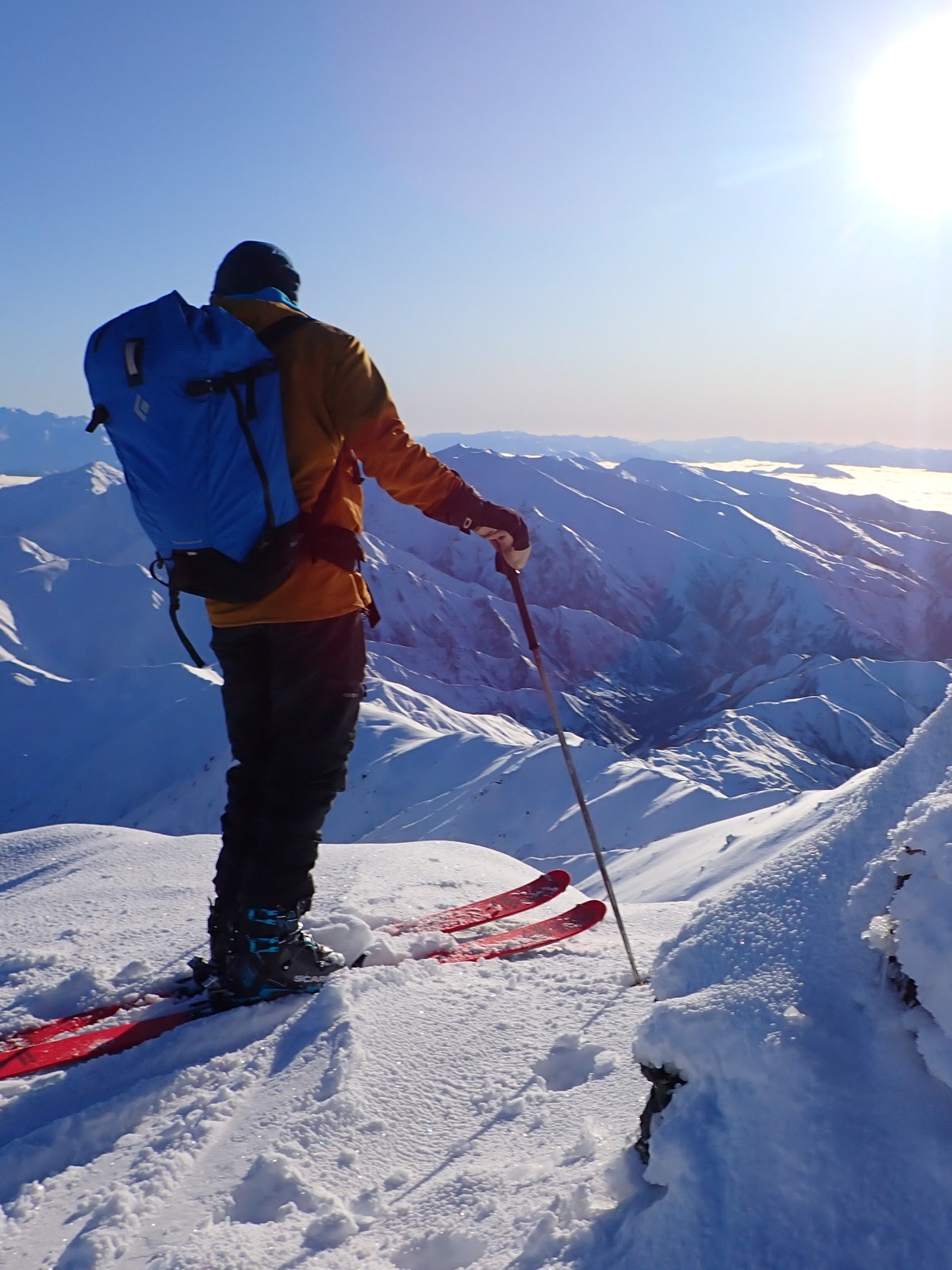
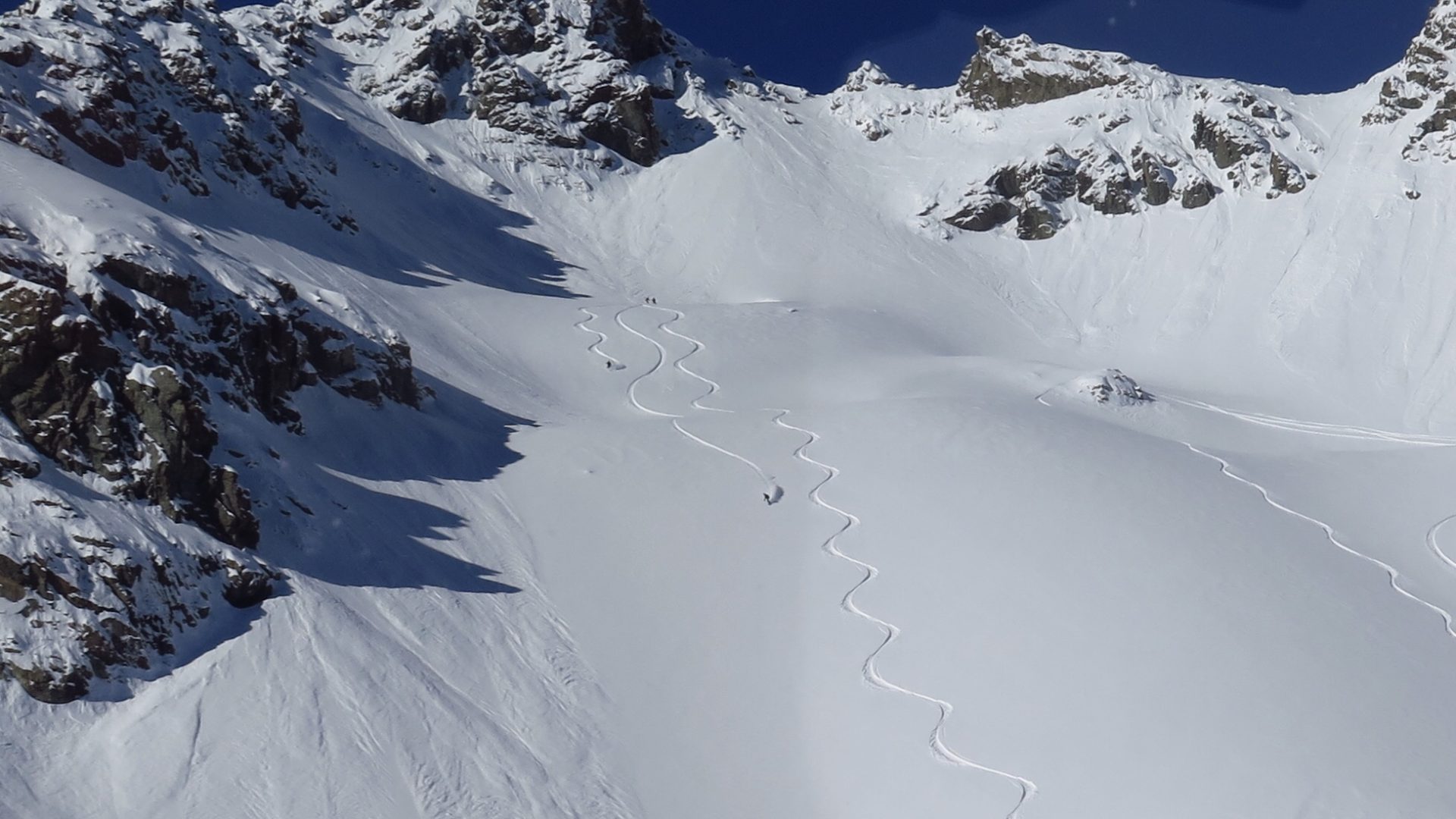
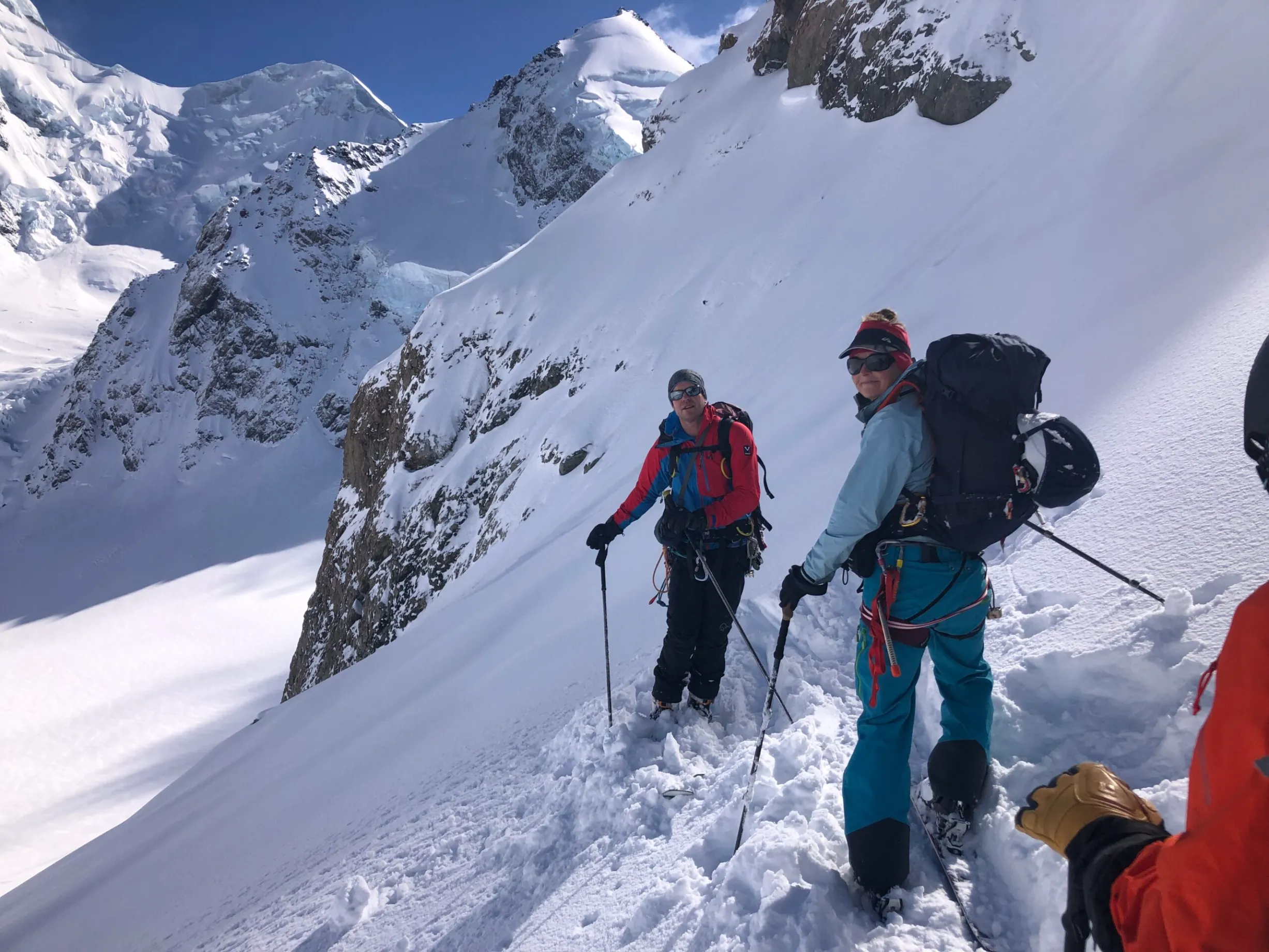
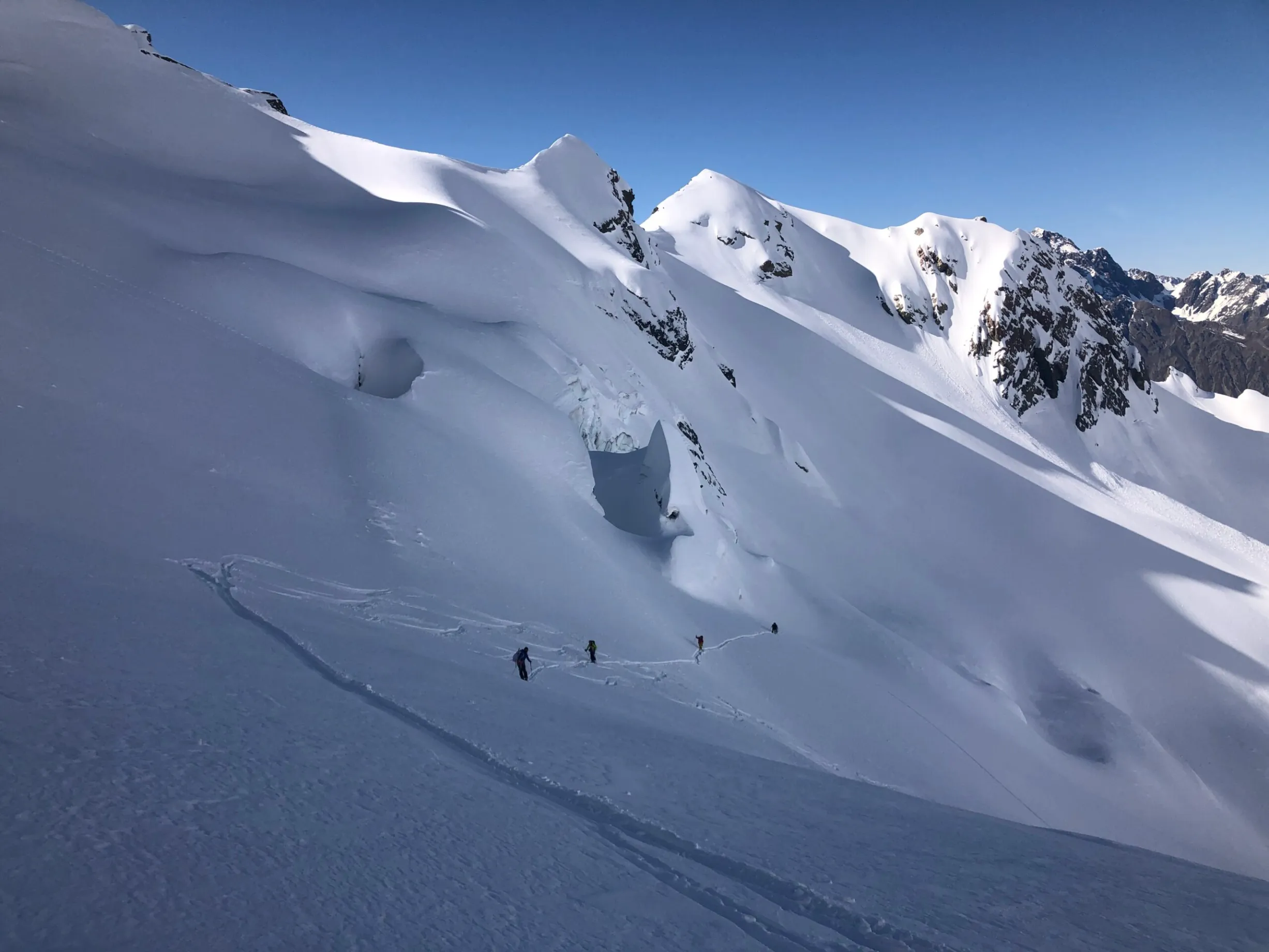
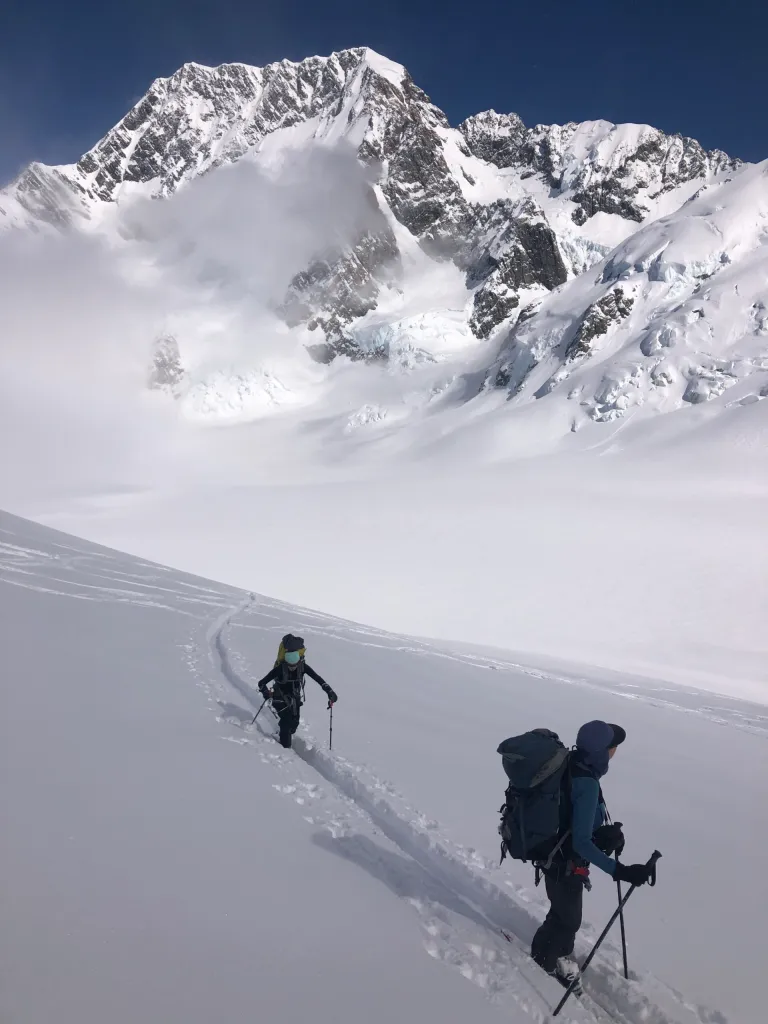
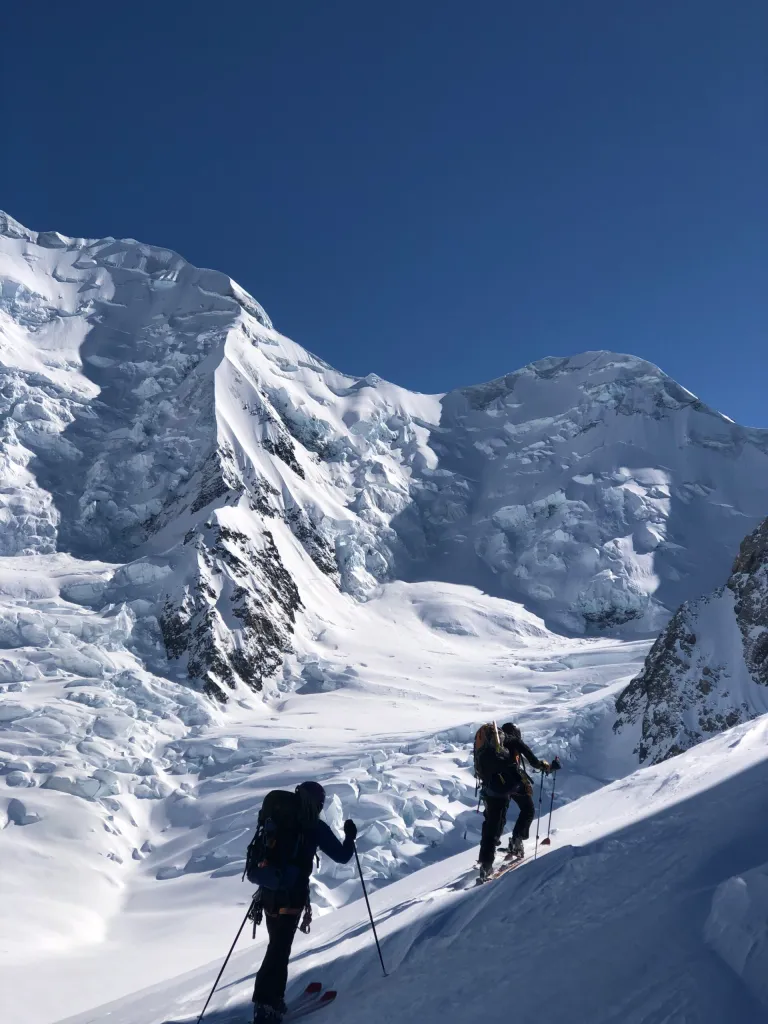
Combine alpine climbing with backcountry skiing deep in New Zealand’s most spectacular mountain terrain. Our IFMGA-qualified guides lead 5 to 7-day ski mountaineering expeditions into the glaciers and high peaks of Aoraki/Mt Cook National Park, Westland National Park, and the Cass Valley — areas inaccessible to day-trip skiers. Helicopter access, alpine hut accommodation, and daily ski touring or summit attempts on terrain that most people only see in photographs.
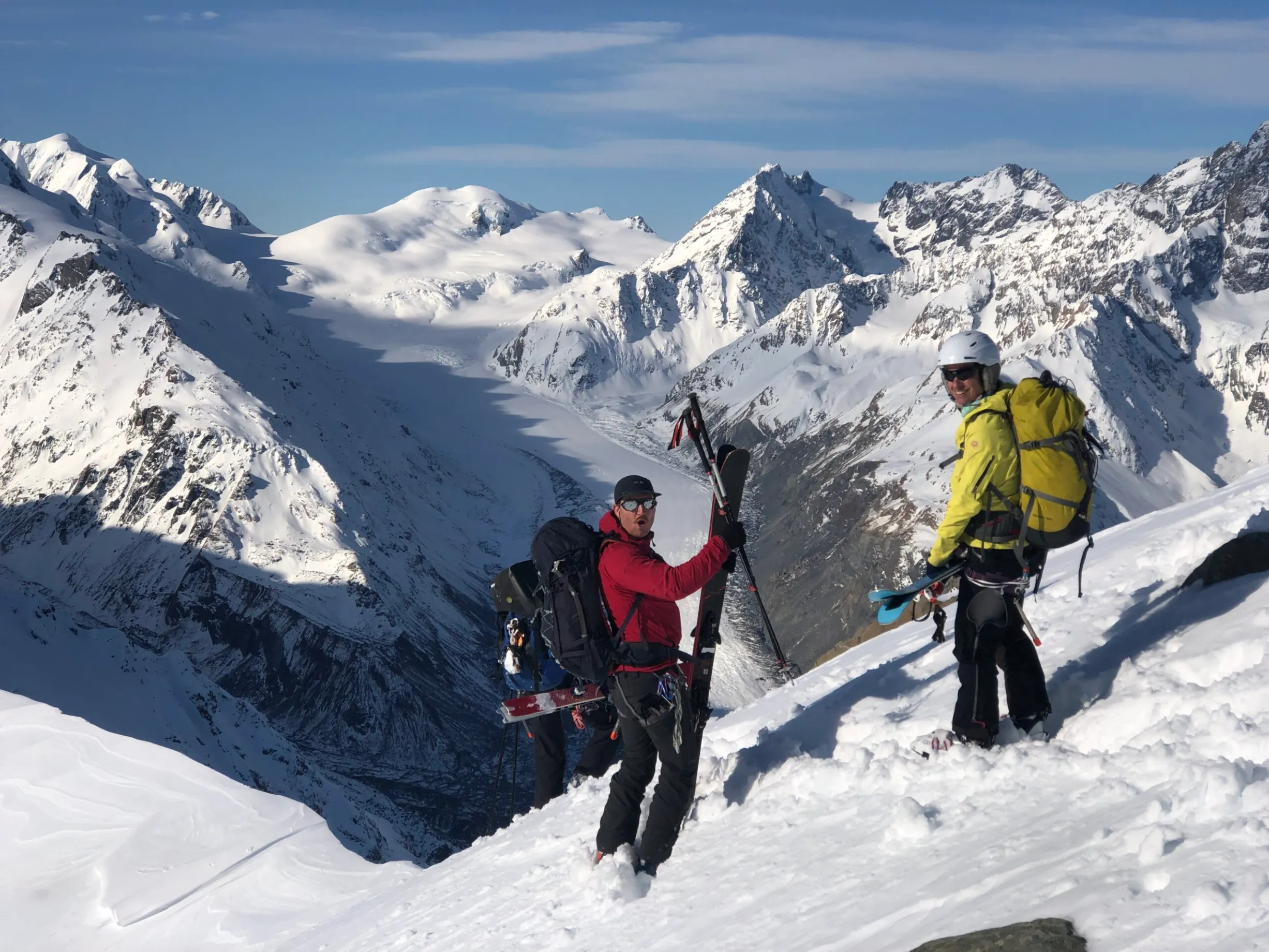
Ski mountaineering is the ultimate fusion of alpine climbing and backcountry skiing. Unlike day-trip ski touring from road access, these multi-day expeditions take you into the heart of the Southern Alps — glaciers, high alpine basins, and peaks above 2,500 metres that can only be reached by helicopter.
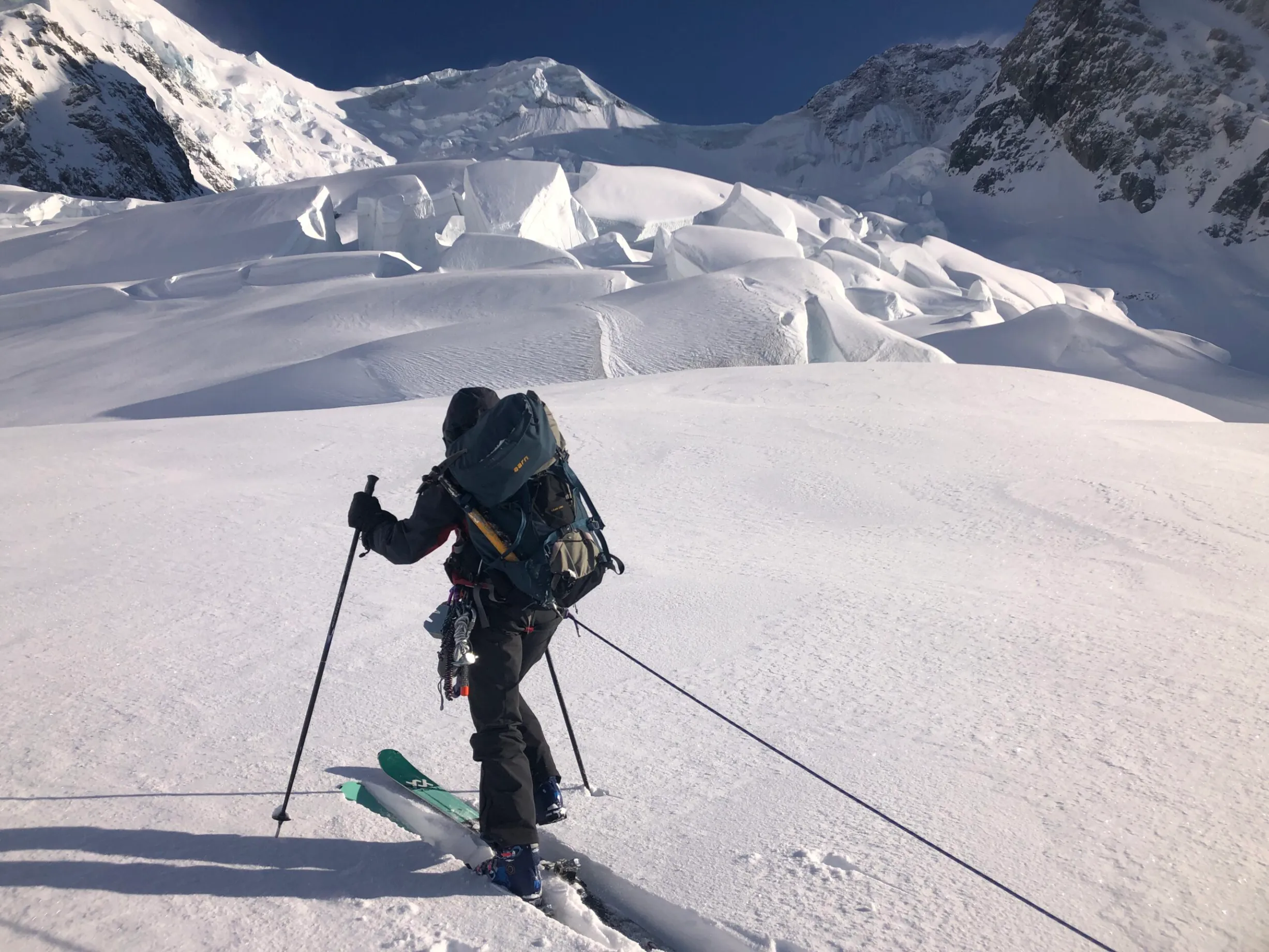
You will spend 4 to 6 nights in high-altitude alpine huts managed by the Department of Conservation, skiing untracked glacial terrain each day. Routes are chosen based on current snow conditions, weather windows, and the group’s ability. On suitable days, your guide may incorporate a short alpine ascent — crampons and ice axes — to access a summit ski descent that few people ever experience.
These trips suit experienced backcountry skiers who want to push further into New Zealand’s alpine environment. Previous ski touring experience and solid fitness are essential — you will be carrying a full alpine ski touring pack and skinning for 3 to 6 hours per day.
All trips with Peak Experience are led by IFMGA (International Federation of Mountain Guides Associations) or NZMGA qualified ski guides with extensive knowledge of the Southern Alps glacial terrain, snowpack assessment, and alpine rescue techniques.
Aoraki/Mt Cook National Park
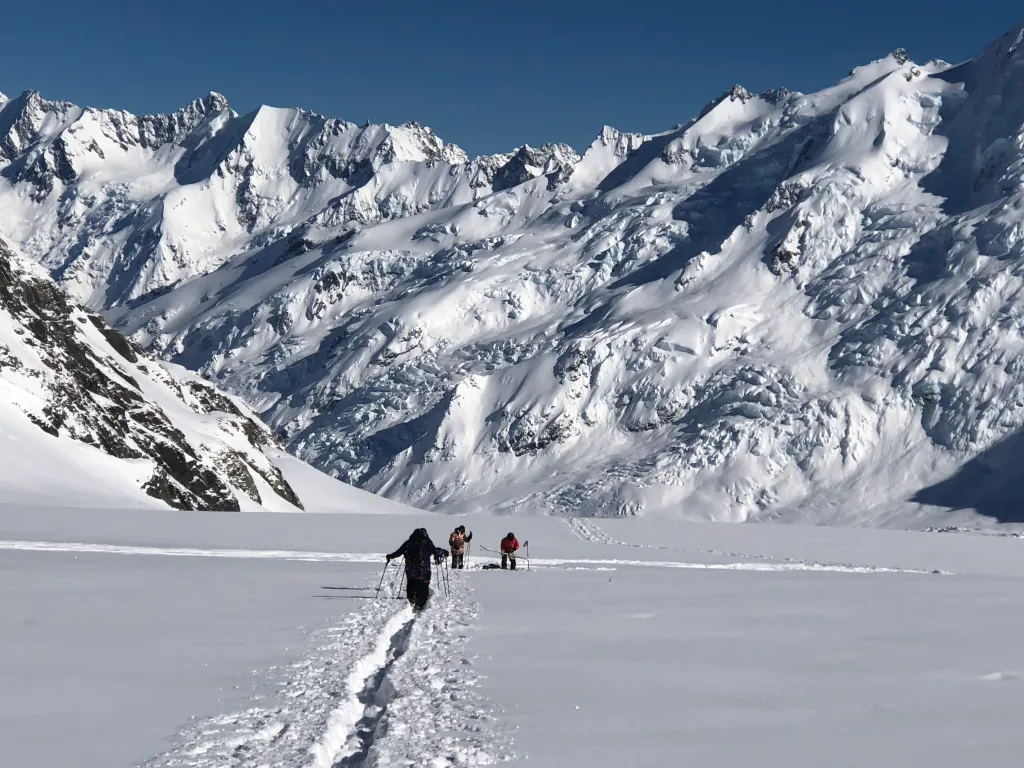
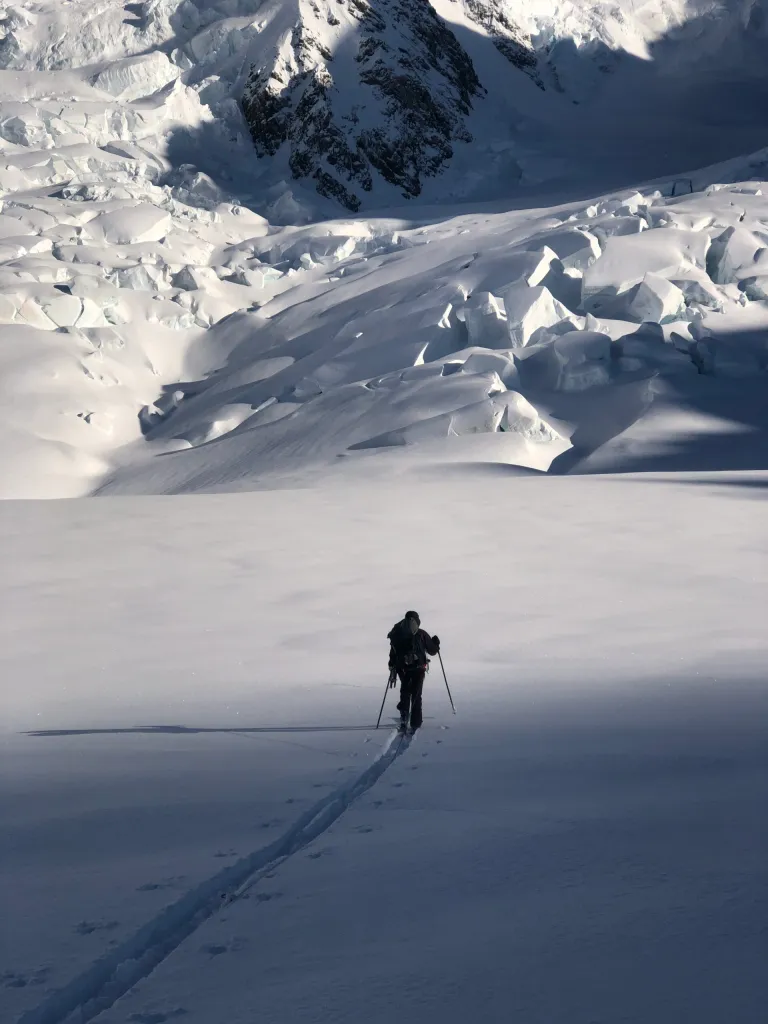
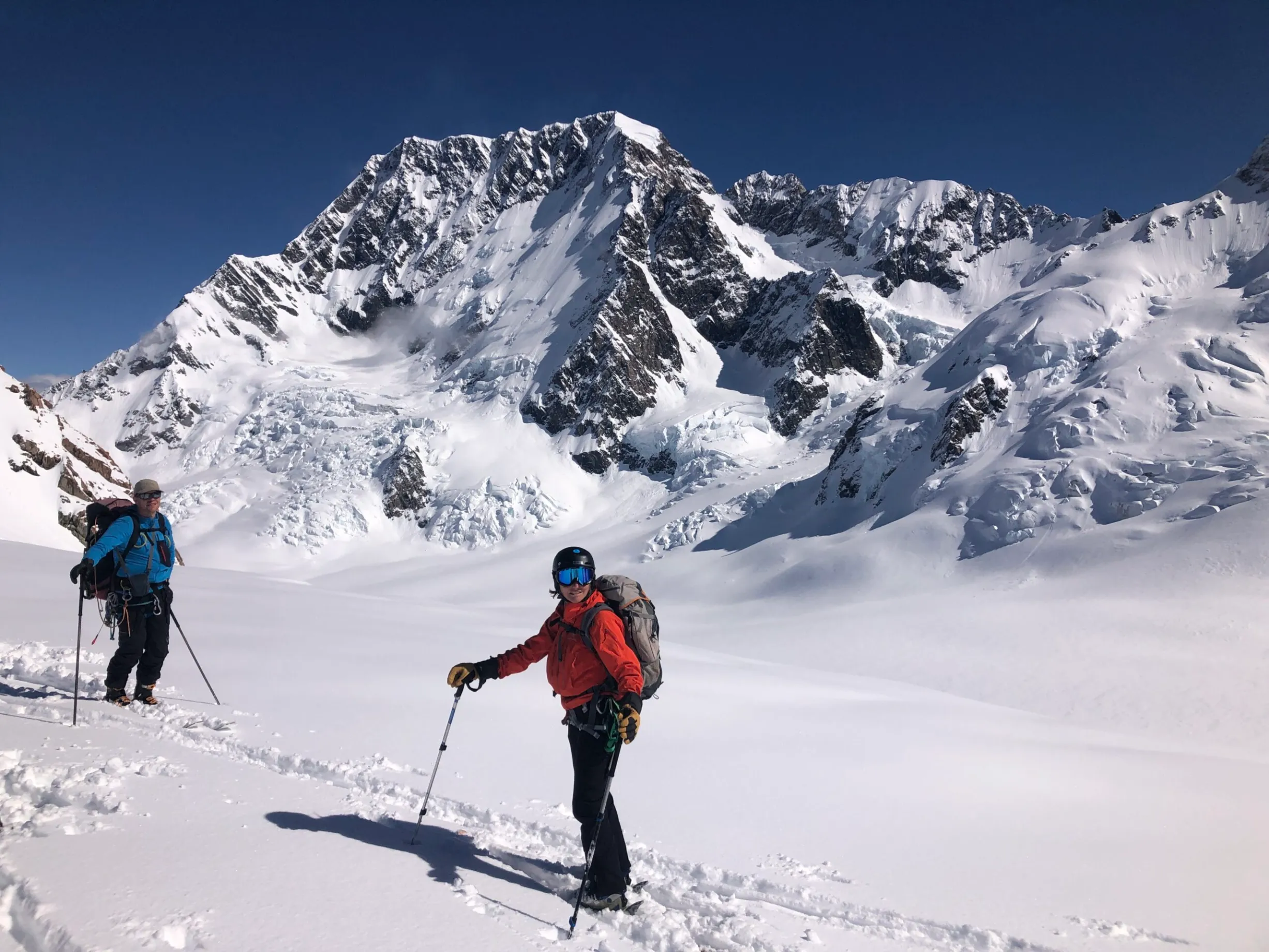
New Zealand’s highest peaks and longest glaciers. The Tasman Glacier system offers vast ski touring terrain above 2,000 metres with runs of 800 metres or more. Access is by ski plane or helicopter to huts on the Grand Plateau, Tasman Saddle, or the Liebig Range. Summit options include Mt Elie de Beaumont, and numerous smaller peaks with superb ski lines. This is New Zealand’s premier ski mountaineering terrain.
Westland / Fox & Franz Josef Glaciers
The West Coast side of the Main Divide receives heavier snowfall and offers exceptional powder skiing when conditions align. Helicopter access to Pioneer Hut or Chancellor Hut opens up the Fox and Franz Josef Glacier systems — wild, remote terrain with a distinctly different character from the eastern side. West Coast trips suit groups seeking more adventurous, expedition-style ski mountaineering.
Cass Valley & Arrowsmith Range
A more accessible option in the Canterbury ranges, the Cass Valley and Arrowsmith Range offer excellent ski mountaineering terrain with shorter helicopter flights and reliable snow coverage from June through October. Well-suited to groups building towards the longer Mt Cook or Westland expeditions, or for those wanting a strong 5-day trip without the logistical complexity of the higher peaks.
Meeting & Preparation
Meeting Location: Wanaka or Unwin Hut, Mt Cook Village
Meeting Time: Either the evening before departure or 8 AM on Day 1
The Peak Experience guides will carry out a full gear check, discuss the route plan, review the weather forecast and avalanche
conditions, and brief you on hut protocols and emergency procedures. If meeting the evening before,
we will share the detailed trip plan over dinner.
Day 1 — Travel & Fly In
Drive to the helicopter staging area (Mt Cook Village, Fox Glacier, or Methven depending on route). Load packs and fly into the high alpine hut. The helicopter flight itself is spectacular — a 15 to 30- minute flight over glaciers and crevasse fields into a landscape of ice and rock. Once at the hut, we settle in, organise gear, and if time allows, head out for an afternoon ski tour to get a feel for the snow and terrain.
Days 2–4 (or 2–6) — Ski Touring & Mountaineering
Each day is planned around the weather and snow conditions. Typical days involve:
Your guide reads the conditions each morning and adjusts the plan. Some days are big touring days
with multiple descents; others may be shorter if weather closes in or the snowpack needs time to
stabilise.
Final Day — Fly Out
Early morning tour or a final descent to a lower hut, followed by helicopter extraction. Drive back to
Wanaka or farewell at Mt Cook Village. If weather delays the helicopter, we have contingency plans
and extra food supplies at every hut.
You will need a full set of alpine equipment. We provide a detailed packing list at booking confirmation.
Rental: Touring skis, boots, and packs can be rented in Wanaka — we can recommend suppliers. Crampons, harness, helmet, and ice axe can be provided if needed — let us know at booking.
Included in the price:
Not included:
Helicopter note: We book helicopter and ski plane flights directly with operators to pass on savings where possible. If we can share flights with other parties on the same day, the per-person cost reduces. Typical helicopter costs are quoted separately at booking confirmation so you have full cost transparency.
All prices are in NZD and include guide fees, food, hut fees, and group equipment. Helicopter flights are additional (quoted separately at booking). Prices reflect the guide-to-client ratio — smaller groups get more personalised terrain choices and flexibility.
5-Day Trip
RATIO | PRICE (NZD) |
1:1 (private) | $6,450 |
1:2 | $4,150 / person |
1:3 | $2,850 / person |
1:4 | $2,500 / person |
7-Day Trip
RATIO | PRICE (NZD) |
1:1 (private) | $9,450 |
1:2 | $5,810 / person |
1:3 | $3,900 / person |
1:4 | $3,000 / person |
NOTE: Check deposit/refund policy matches your actual terms before publishing.
The ski mountaineering season in the Southern Alps runs from June through October, with conditions varying significantly across the range:
June–July (Early Season)
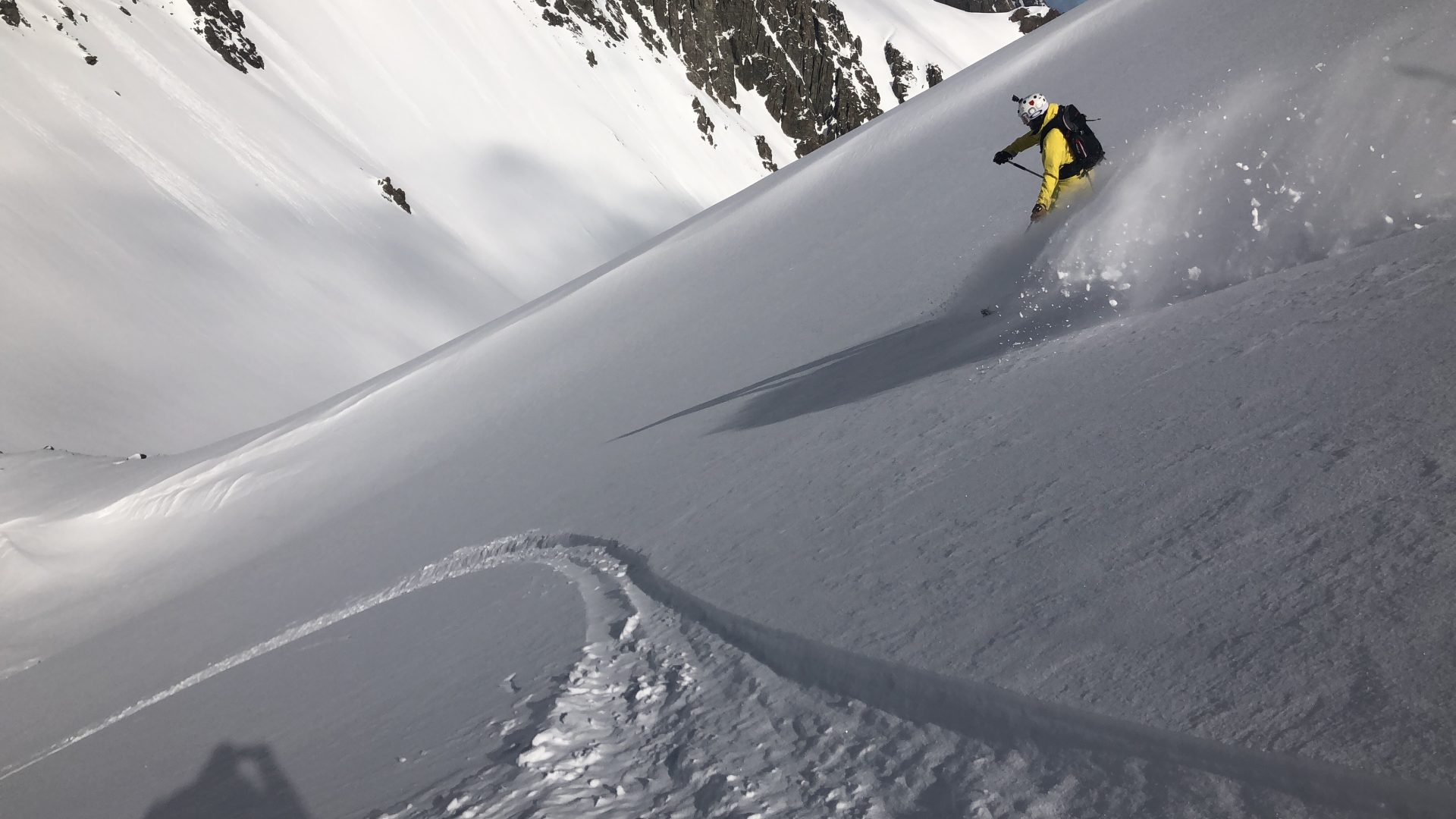
Fresh snowfall builds the snowpack. Cold temperatures mean excellent powder skiing when storms clear. Shorter days limit touring hours but the snow quality can be outstanding. Good for Cass Valley and lower-altitude options.
August–September (Peak Season)
The most reliable period for multi-day trips. Deep, stable snowpack, longer days, and more settled weather windows. This is when the big Mt Cook and Westland trips work best — enough snow coverage for high-altitude glacier skiing and the best summit conditions.
October (Spring)
Spring corn skiing — warm days create a freeze-thaw cycle that produces smooth, fast snow surfaces in the morning. Excellent for longer ski descents when timed right. Higher crevasse risk as the snow bridges weaken. Best suited to experienced groups.
Weather windows: Multi-day alpine trips depend on weather. We monitor forecasts closely and will delay departure by a day or two if a better window is coming. Flexibility with your travel dates significantly increases the chance of getting the best conditions.
Ski mountaineering trips are physically and technically demanding. To get the most from the experience, we recommend:
Skiing ability:
Strong intermediate to advanced off-piste skier. You must be comfortable skiing variable snow conditions (powder, crust, wind-affected) on moderate to steep terrain (30–40 degrees). Resort black run confidence is a minimum.
Ski touring experience:
Previous backcountry ski touring experience is strongly recommended. You should be familiar with skinning uphill, kick turns, and basic touring transitions. If you are new to ski touring, we suggest starting with our day or multi-day Ski Touring trips from Wanaka before progressing to a mountaineering expedition.
Fitness:
You will be skinning for 3 to 6 hours per day carrying a 10–15kg pack at altitudes of 1,500 to 2,000 metres. Good cardiovascular fitness is essential — you should be comfortable hiking uphill for 4–5 hours at a moderate pace. Regular running, cycling, or hiking in the months before the trip will prepare you well.
Mountaineering experience:
Not required. Your guide will teach and manage all rope work, crampon technique, and glacier travel. However, previous alpine experience is an advantage and will allow the group to attempt more ambitious objectives.
Age: Minimum age 16 with parental consent. No upper age limit — fitness matters more than age.
Q: What is the difference between ski touring and ski mountaineering?
A: Ski touring is backcountry skiing using skins to climb and skis to descend, typically as day trips from road access. Ski mountaineering combines ski touring with alpine climbing techniques — crampons, ice axes, roped glacier travel — on multi-day expeditions into high-altitude terrain. The skiing is more committing, the terrain more remote, and the experience more immersive
Q: Do I need to bring my own equipment?
A: You need ski touring equipment (skis, skins, boots) and personal alpine gear (crampons, harness, helmet, ice axe).
Touring skis and boots can be rented in Wanaka.
Peak Experience can provide crampons, harness, helmet, and ice axe if needed — let us know at booking. A full equipment list is sent at booking confirmation.
Q: What happens if weather prevents helicopter access?
A: We build flexibility into every trip. If helicopter access is delayed, we adjust the itinerary — sometimes departing a day later into a better weather window. If conditions prevent the trip entirely, we offer a full refund or reschedule at no extra cost. Extra food and fuel are stocked at all huts in case of extended stays.
Q: How fit do I need to be?
A: You should be comfortable skinning uphill for 4–5 hours carrying a 10–15kg pack. Regular cardiovascular exercise — running, cycling, or hiking — for 2–3 months before the trip is recommended. Your guide adjusts daily objectives to the group’s fitness and conditions.
Q: Can I do a shorter trip to try ski mountaineering?
A: Our 5-day trip is the shortest option for a genuine ski mountaineering experience — you need time to access remote terrain and make the most of the helicopter investment. If you are unsure, we recommend starting with our multi-day Ski Touring trips from Wanaka, which build the skills and fitness needed for a mountaineering expedition.
Q. Do I need Travel Insurance
A: Yes – we advise yo to get travel insurance to cover cancellation of trips or for repatriation and medical expenses in your home country.
Rescue, Emergency and treatment of injuries are covered by ACC in New Zealand regardless of being a citizen / resident or tourist.
Complete our online booking form or contact us for more information.