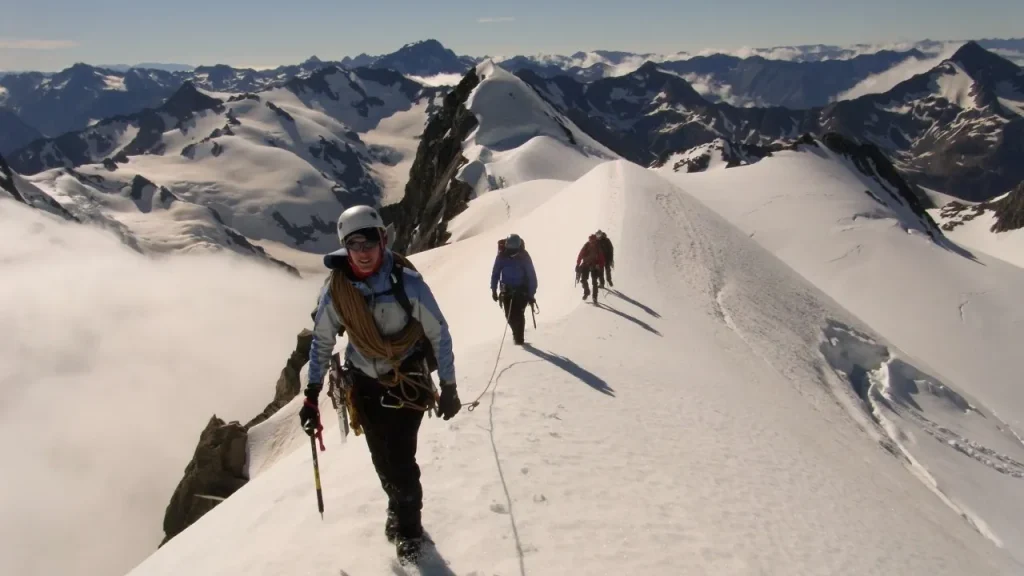
A good alpine skills course changes how you move in the mountains. It is not just about learning to swing an ice axe or clip into a rope. It is about making better decisions when the weather shifts, the snow changes, or the terrain gets steeper than expected.
That matters in New Zealand. Our alpine terrain is serious, compact, and often unforgiving. In a single day, you can move from glacier travel and steep snow to exposed rock, strong winds, and fast-moving weather. If you want to climb independently, prepare for bigger objectives, or simply build confidence with the right systems, choosing the right course is a practical first step.
A strong alpine skills course in New Zealand should build judgment as much as technical ability. Anyone can practice knots in a dry field. The real value comes from learning how those systems work in mountain conditions, with gloves on, under time pressure, and in terrain where mistakes carry consequences.
At a minimum, a course should cover movement on snow and ice, use of crampons and ice axe, self-arrest, ropework, belaying, and basic anchor systems. For many climbers, that is the starting point rather than the end goal. The better courses also teach route selection, pacing, hazard recognition, and how to adapt plans when conditions do not match the forecast.
Glacier travel is another key piece in New Zealand alpine terrain. If your objectives include glaciated peaks, you need more than a basic understanding of rope spacing and crevasse rescue. You need to understand how glacier hazards present in real terrain, how teams travel efficiently, and what changes when visibility drops or the surface weakens later in the day.
The same goes for avalanche awareness. Not every alpine course is an avalanche course, and that distinction matters. If your goals include winter climbing, ski touring, or mountaineering in snow-loaded terrain, make sure the course addresses snowpack assessment, terrain choices, and practical risk management at an appropriate level.
Check our Alpine Skills courses Page
New Zealand is one of the best places in the world to build alpine competence because the terrain is real and the lessons are immediate. It is also a place where poor habits get exposed quickly.
Our mountain ranges are steep, weather-driven, and close to the coast. Conditions can change within hours. Approaches are often shorter than in larger continental ranges, but that convenience can lead people to underestimate the seriousness of the environment. A course here should not present alpinism as a checklist of techniques. It should teach you how to link those techniques together in a landscape that does not stay predictable for long.
That is why course design matters. A controlled progression from basic movement skills to more complex travel and decision-making is far more useful than a rushed attempt to cover everything. The best learning happens when skills are introduced, repeated, then applied on real alpine terrain with clear coaching.
The short answer is that it depends on your goals, not just your experience level.
If you are a capable tramper, climber, or skier moving toward mountaineering, an alpine skills course gives you the framework to travel safely in snow, ice, and glaciated terrain. You may already be fit and comfortable outdoors, but alpine travel introduces different hazards, different systems, and less margin for error.
If you are a motivated beginner, a course can also be the right entry point, provided it is structured for that level. You do not need years of climbing experience to start learning. You do need a willingness to listen, practice, and work within a disciplined safety framework.
For more experienced climbers, the value is often in refining systems and closing gaps. Many people have picked up alpine habits informally over time. Some of those habits are good. Some are inefficient, outdated, or not suited to steeper and more consequential objectives. Formal instruction can sharpen technique and improve decision-making in a way that casual experience often does not.
The best course is not always the most advanced one. It is the one that matches where you are now and where you want to go next.
If your aim is general mountaineering, look for a course that builds competence in snowcraft, cramponing, ice axe use, rope travel, and introductory alpine systems. If your aim is steeper climbing, you will need more focus on pitched movement, anchors, belays, and technical terrain. If ski mountaineering is the goal, the course needs to account for avalanche terrain, movement on skis and bootpacks, and transitions between climbing and skiing systems.
Ask what terrain the course uses and how much time is spent applying skills in realistic conditions. A high-quality course should be clear about outcomes. After the course, what should you be able to do independently, and what still requires guided support? Honest providers do not overpromise. They explain the difference between foundational competence and full independence.
Guide qualifications matter as well. In alpine instruction, experience alone is not enough. You want instructors with recognized training and current professional standards. Certified mountain guides bring more than technical knowledge. They bring risk management discipline, teaching experience, and the ability to adapt instruction to changing mountain conditions.
Good alpine instruction is calm, precise, and practical. It gives you enough challenge to learn without pushing you beyond the point where judgment breaks down.
That starts with small details. How you fit crampons. How you hold an ice axe on different angles of terrain. How you coil a rope so it is ready when you need it. In isolation, those details can seem minor. In the mountains, they shape efficiency and safety.
It also means instructors explain why a system is being used, not just how. There is rarely only one correct answer in alpine terrain. There are better choices and worse ones based on snow conditions, team ability, weather, timing, and objective hazard. Strong instruction builds the habit of evaluating those factors rather than blindly copying technique.
Client-to-guide ratios are part of this. Smaller groups usually allow for better coaching, more repetition, and tighter supervision in technical terrain. That can be especially important for newer climbers or anyone working on skills that need close feedback.
One common mistake is choosing by location or price alone. Convenient access and cost matter, but they should not outweigh the quality of instruction, the guide standard, or the suitability of the course for your objective.
Another mistake is overestimating how much can be learned in a short program. A two-day course can introduce core skills and improve awareness, but it will not make someone fully prepared for every alpine objective. Progress in the mountains is earned through repetition, mentoring, and gradually increasing complexity.
The opposite mistake is waiting too long because you think you need more experience first. In many cases, early professional instruction saves time and reduces risk. It helps you build sound habits from the beginning rather than unlearning weak ones later.
The most useful alpine skills course is one that sits within a bigger progression. After your first program, the next step might be a guided ascent where you apply what you learned, an avalanche course, a glacier-specific program, or a more technical mountaineering course focused on steeper ground.
That progression is where real capability develops. Skills become reliable when they are practiced across different conditions and objectives. Judgment improves when you start seeing how terrain, weather, and timing interact across multiple trips.
For climbers and skiers who want that long-term pathway, working with a professional guiding outfit can make the process more coherent. A team such as Peak Experience can help match your current level to the right instruction and then build toward larger alpine goals with the same safety and training standards carried through each step.
The right alpine skills course New Zealand mountaineers choose should leave you more capable, but also more realistic. Good training does not create false confidence. It gives you practical tools, clearer judgment, and a better understanding of where your limits currently sit.
That is a strong outcome. In the mountains, confidence is useful only when it is backed by competence. A well-run course should help you move more efficiently, recognize hazards earlier, and make sounder calls when conditions are less than ideal.
If you are choosing a course this season, focus on fit. Match the program to your objective, look closely at guide qualifications, and choose instruction that emphasizes real mountain application over theory alone. The right course will not just prepare you for one climb. It will shape how you approach the mountains for years to come.
The best time to build alpine skills is before you need them in a high-pressure moment, while there is still space to learn carefully, ask questions, and develop habits that hold up when the terrain gets serious.
