
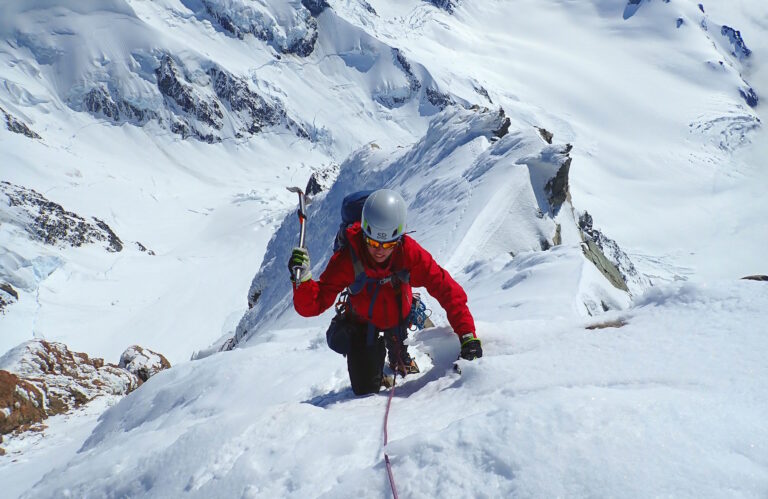
A fine weather forecast in the Southern Alps can still deliver hard ice at dawn, soft snow by midday, and whiteout by afternoon. That is exactly why guided mountaineering in New Zealand appeals to climbers who want more than a summit photo. The right guide gives you access, judgment, technical oversight, and often a faster path to becoming a more capable mountaineer.
New Zealand packs serious alpine terrain into a relatively compact mountain system. Glaciated routes, mixed climbing, steep snow, changeable maritime weather, and complex approaches all combine to create outstanding objectives – and real consequences for poor decisions. For many climbers, working with a certified mountain guide is the most effective way to move through that terrain with purpose.
New Zealand’s mountains are not especially high by global standards, but they demand respect. Conditions shift quickly, snowpacks can be inconsistent, and route quality often depends on recent weather rather than calendar season. A line that looks straightforward from a hut can feel very different once you are on exposed snow slopes or moving through broken glacier terrain.
That is where professional guiding matters. A strong guide is not just there to lead from the front. They manage terrain choices, timing, pacing, hazard exposure, and group decision-making. They also adjust the objective when conditions do not support the original plan. In practice, that often makes the difference between a forced retreat and a successful day in the mountains.
For less experienced climbers, guiding can also compress the learning curve. Instead of trying to piece together skills from occasional partners and inconsistent conditions, you get direct coaching in the terrain where those skills actually matter. For experienced climbers, a guide can open up bigger objectives, more efficient route strategies, and local knowledge that would take years to build independently.
Guided mountaineering is not only for beginners. In New Zealand, it serves several different types of clients, and each gets something slightly different from the experience.
A motivated beginner may book a course or introductory climb to build movement skills on snow and ice, learn rope systems, and understand how alpine decisions are made in real time. An intermediate climber may want to progress toward steeper routes, glacier travel, or mixed terrain with professional oversight. A strong backcountry skier or rock climber may already have fitness and movement skills but need structured alpine training to operate safely in a mountaineering context.
Then there are experienced mountaineers visiting from overseas or elsewhere in New Zealand who simply want efficient access to the best objectives available for the conditions. In that case, the guide’s value lies in route selection, risk management, and local judgment rather than basic instruction.
One of the biggest mistakes climbers make is choosing a mountain based on reputation instead of suitability. The right objective depends on your current fitness, technical ability, previous altitude and alpine experience, and what conditions are doing that week, not what they did last season.
In New Zealand, that might mean shifting from a summit-focused plan to a skills-based ascent, or from a glaciated route to a rock and snow objective with lower objective hazard. That is not a downgrade. It is often the smartest way to get quality movement, good instruction, and a successful outcome from a short weather window.
A professional guide should be candid about this. If your chosen route does not match your background or the conditions, you want clear advice, not sales language. Good mountain planning is practical. It balances ambition with what is actually achievable and safe.
The best guided mountaineering in New Zealand combines planning, instruction, and decision-making support from the start. Long before you step onto snow, there should be a conversation about your goals, experience, fitness, and equipment. That early planning helps match you to the right trip, whether that is a private ascent, an alpine skills course, or a progression toward more technical objectives.
On the mountain, the guide’s role is both technical and strategic. They manage rope systems, terrain travel, and hazard assessment, while also watching how you move, how you respond to pressure, and where coaching will make the biggest difference. On a good day, this feels smooth. That is not because the terrain is simple. It is because the systems behind the day are strong.
You should also expect adjustment. Start times may change. Routes may change. A summit may stop being the priority if snow stability, weather, or team performance shifts the risk profile. That flexibility is part of professional guiding, not a sign that something has gone wrong.
In alpine terrain, credentials are not a nice extra. They are a baseline indicator of training, assessment, and professional standards. When evaluating a guide service, look closely at whether guides hold relevant New Zealand and international mountain guiding qualifications, and whether the business has a clear safety framework rather than broad claims about experience.
That distinction matters because mountain judgment is hard to assess from the outside. Anyone can describe an adventure. Fewer operators can show a consistent standard of technical competence, client care, and terrain-specific risk management.
For clients who are serious about progression, this is also about the quality of instruction. A properly qualified guide does more than keep the rope tight. They teach systems that stand up beyond the trip itself. That means better habits, cleaner movement, and stronger decisions when you head back into the mountains.
A lot of clients come to guided mountaineering looking for an ascent and leave valuing the instruction just as highly. That is especially true in New Zealand, where varied conditions can teach a great deal in a short period if the guide knows how to coach effectively.
You might spend part of a trip working on crampon technique, ice axe use, efficient transitions, short roping, or glacier travel systems. You may also learn less visible but equally important skills such as pacing, terrain reading, weather interpretation, and when to turn around. Those are the capabilities that build long-term confidence.
This blend of guiding and education is one reason many climbers return for multiple trips rather than treating a guided climb as a one-off experience. A well-structured progression can take you from introductory alpine movement to more technical mountaineering and ski mountaineering objectives over time.
Fitness still matters. A guide can improve safety margins and decision-making, but they cannot remove the physical demands of moving in steep alpine terrain with a pack. Preparation should reflect the objective. For most New Zealand mountaineering trips, that means steady uphill endurance, balance under load, and enough strength to move efficiently when tired.
Technical preparation depends on your background. Some clients arrive with solid rock or ski experience but limited snowcraft. Others have done general hiking and need a proper introduction to crampons, ice axe use, and rope travel. The key is honesty. If you overstate your ability, the trip becomes less effective for everyone.
Equipment also deserves attention. Good boots, appropriate layers, and a pack system that works in alpine conditions are more important than buying every specialist item on the market. A reputable guiding company will help you sort what is essential, what can be hired, and what should be tested before the trip.
The best fit is not always the operator with the broadest trip list. Look for a service that communicates directly, asks specific questions about your goals, and is willing to recommend a different path if your first choice is not the right one.
That is especially important if you are trying to build a progression rather than book a single day out. A company that offers both guided objectives and formal instruction can provide a much clearer pathway from interest to real competence. Peak Experience, for example, positions that combination well by pairing professionally guided alpine trips with skills training and avalanche education through internationally aligned standards.
Trust also comes from clarity. You should know who is guiding, what the ratio is, how decisions are made, and what the contingency plan looks like if conditions turn. In serious terrain, transparency is part of professionalism.
There is a reason climbers use New Zealand to prepare for bigger international goals. The terrain is varied, the conditions are often demanding, and the mountains reward efficient systems rather than casual improvisation. You can develop quickly here because the environment gives honest feedback.
That said, the same factors that make New Zealand effective for progression also make it unforgiving. Maritime snowpacks, glaciated approaches, and fast-moving weather create situations where small mistakes compound quickly. Guided climbing is not about removing challenge. It is about managing that challenge with better information, stronger systems, and expert support.
If you are considering guided mountaineering in New Zealand, the best starting point is not asking which summit is most famous. Ask what kind of mountaineer you want to become, then choose the guide and objective that move you toward that standard.